





Adding blocks from the toolbar
You can add new content blocks using the insert menu in the toolbar while writing.
Content blocks are the building units of an Insight. Each block represents a piece of content — such as text, media, or research data — that can be arranged, reordered, and configured to tell a cohesive research story.
Unlike traditional text editors, which rely on a single continuous text stream, the Insight Editor uses blocks to give teams more control over structure, clarity, and mixed evidence types.
Blocks can be added in several ways:
Blocks are inserted directly into the document flow and can be placed anywhere within the Insight.
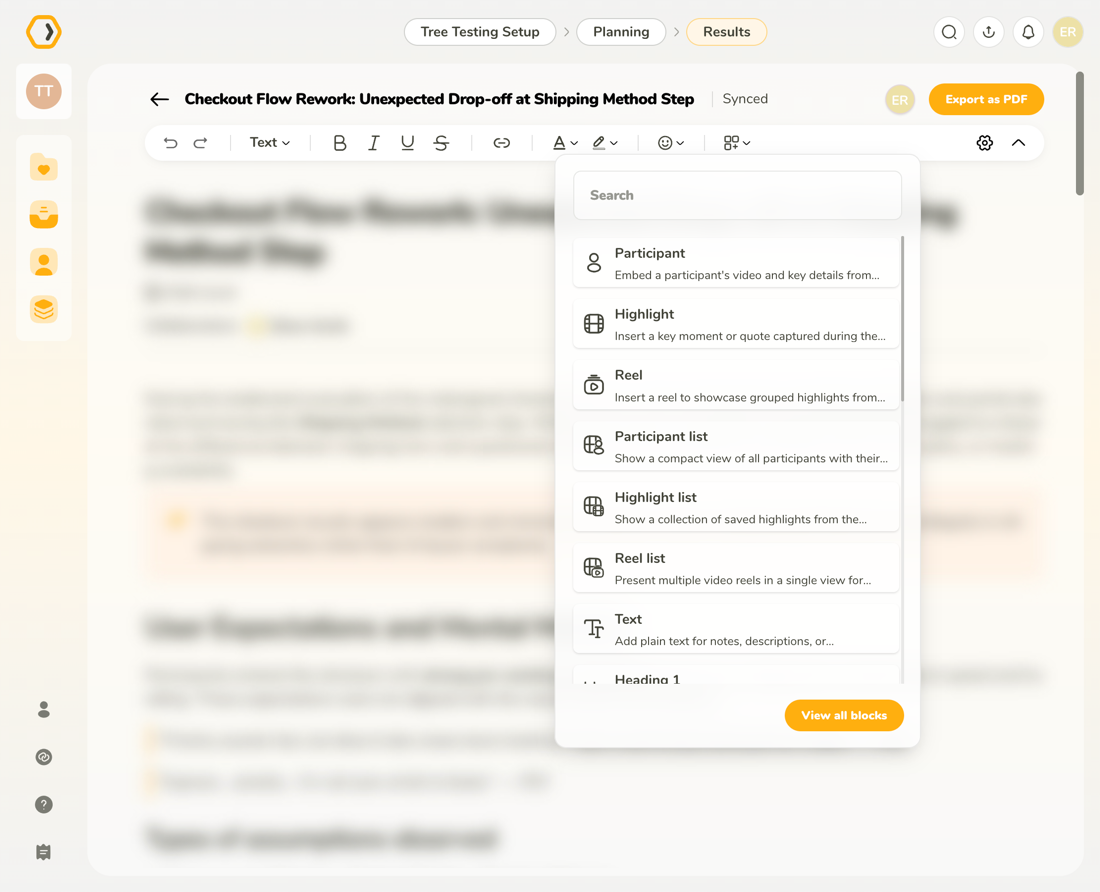
You can add new content blocks using the insert menu in the toolbar while writing.
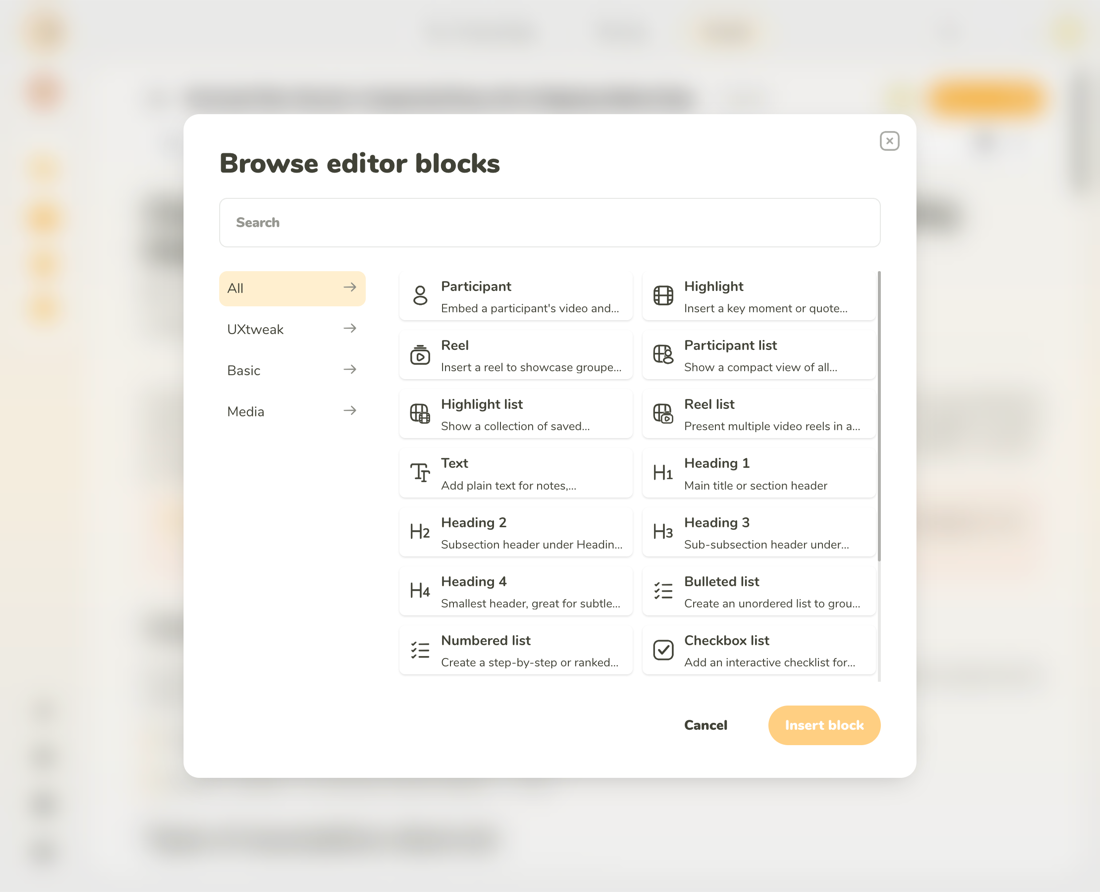
You can browse all available block types and filter them by category to find the right block.
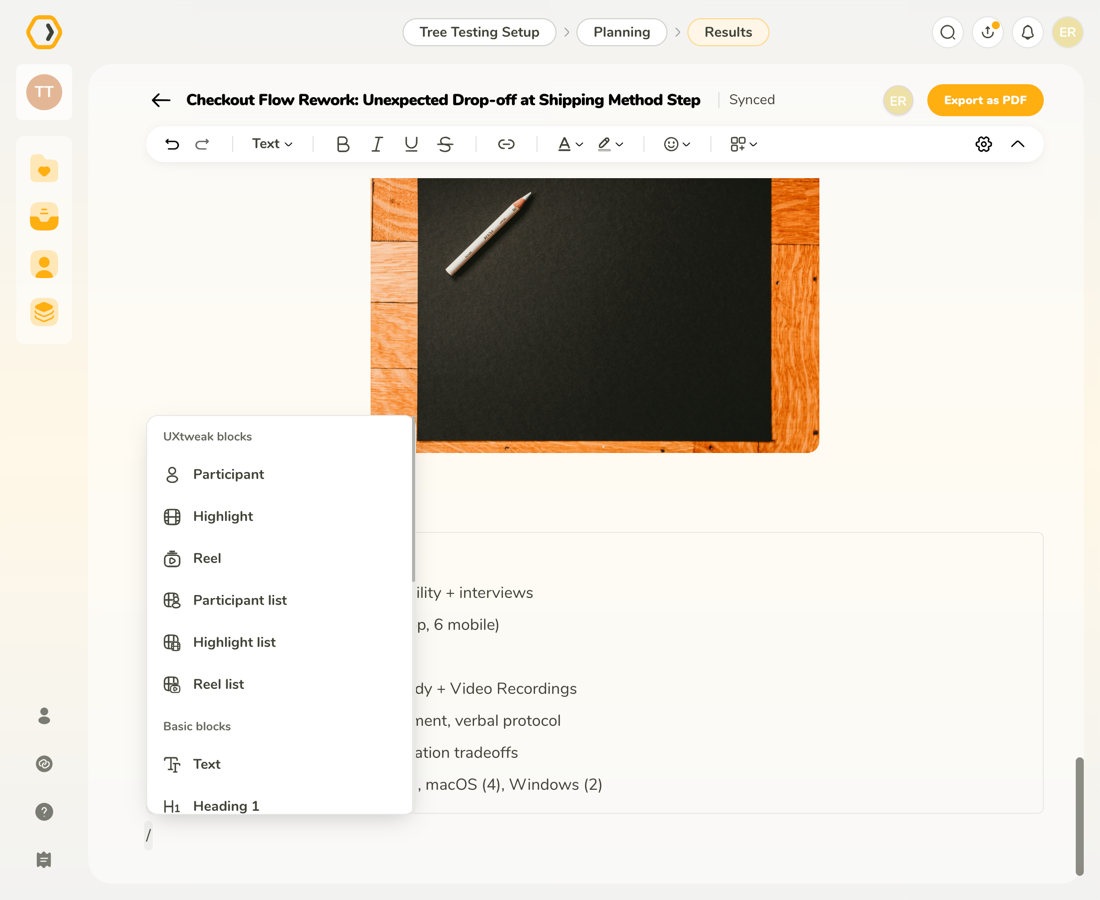
You can add blocks directly in the content area using the inline insert option.
Each block has a drag handle that allows you to reorder content freely. Dragging a block moves it to a new position without disrupting formatting or other blocks.
Dragging supports:
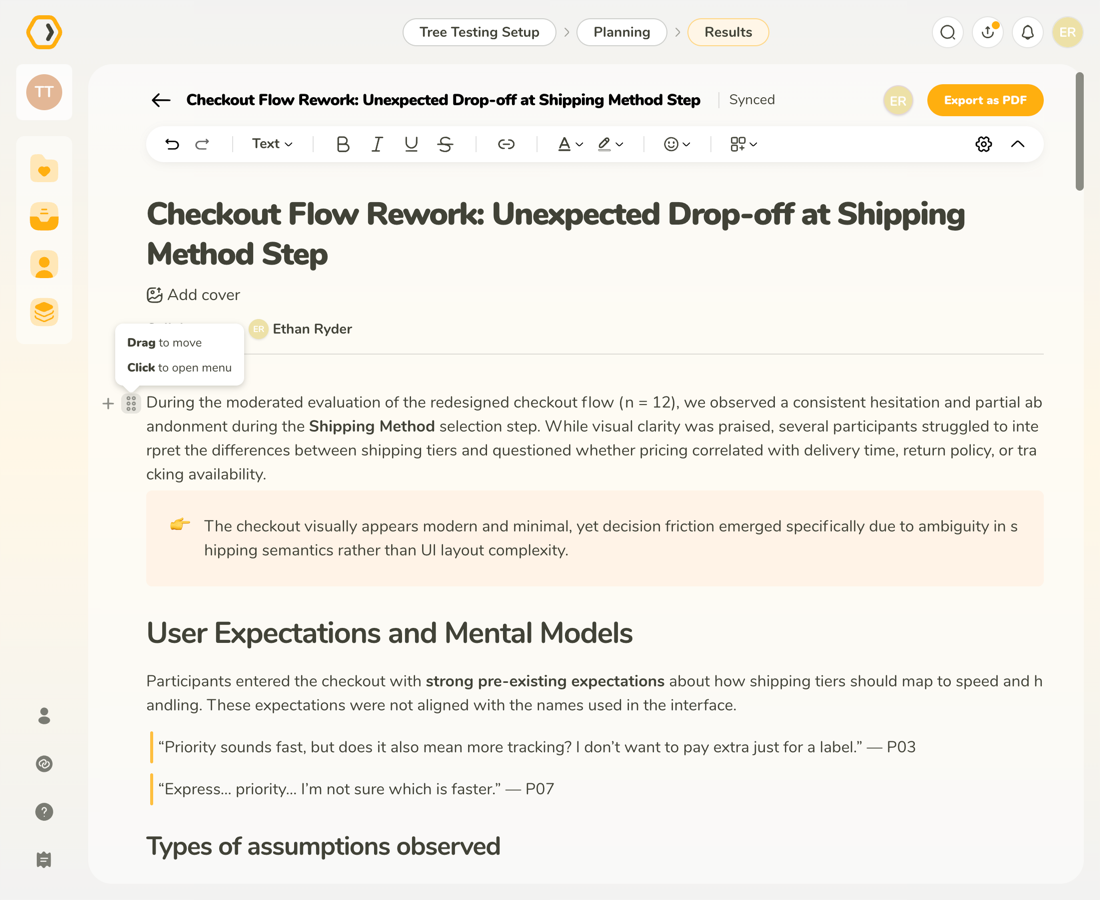
You can drag blocks to reorder them or click the handle to access block actions.
Clicking the drag handle opens a dropdown with actions that apply to the selected block.
Common actions include:
Some block types include block‑specific actions, which appear below the generic actions. These actions adjust the behavior or display of that block.
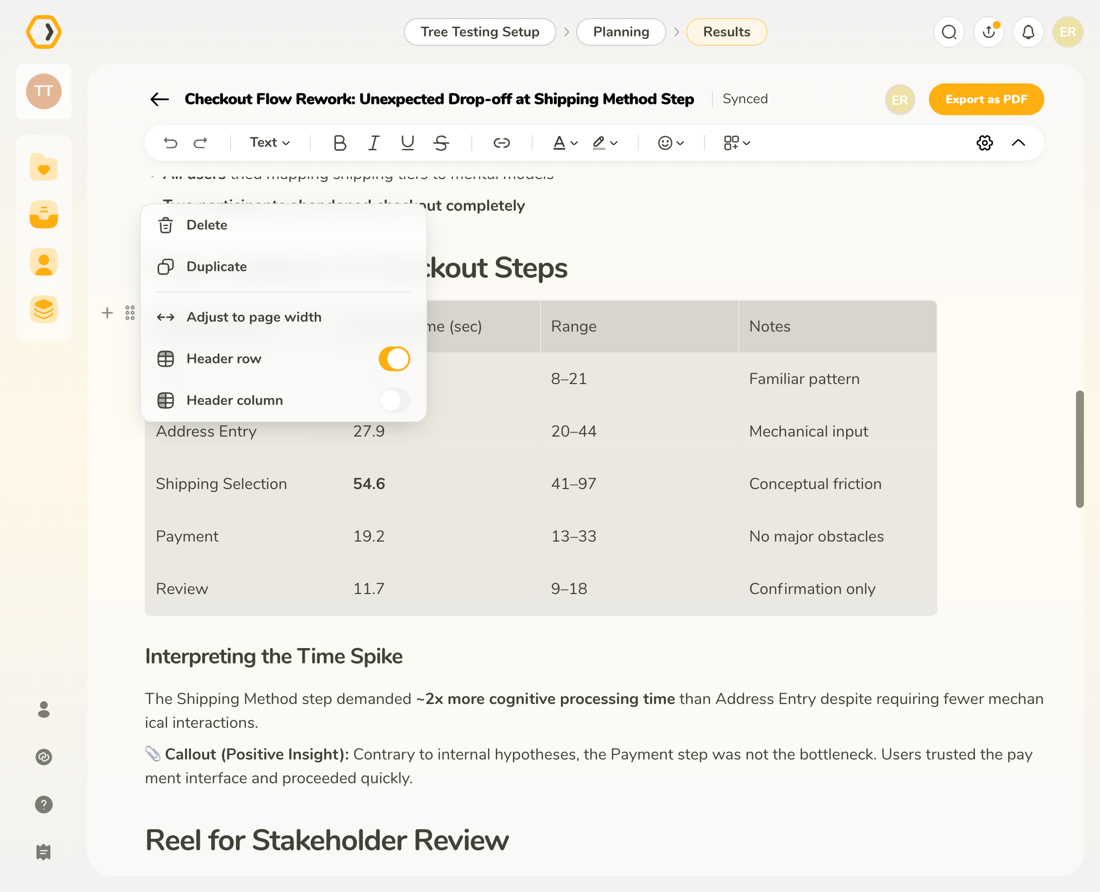
You can manage blocks using generic actions like duplicate or delete, along with block-specific options such as table settings.
Blocks can be combined in any order. For example, a paragraph of narrative text can be followed by a participant highlight, then by a question results block, and then by a quote.
This flexibility makes it possible to:
Blocks are divided into three categories:
The next page describes the UXtweak research blocks in detail.