





Copy link for Figma Plugin
After you paste your Figma file link into UXtweak, you’ll receive a special link. Copy it and paste it into the UXtweak Figma plugin.
This section covers how to use the Design tab to:
Click a design to edit its appearance and behavior within the prototype.
Prototype Testing makes it easy to use a prototype you’ve already created in Figma.
You can import your Figma prototype into UXtweak either by using a Figma share link or through our Figma plugin. Both options are supported.
The plugin can be especially helpful if your prototype is more complex. It lets you import just a specific flow rather than the whole Figma page, supports external components and sections, and handles structured designs more reliably. It also works without requiring you to log into Figma from within UXtweak.
To import your prototype using the plugin, you’ll need to:
Open the Figma file that contains the prototype you want to import and make sure you are in the Design view.
Click “Share” in the top-right corner and set the sharing permissions to “Anyone with the link can view.” Then, copy the link to the Figma file.
Go to UXtweak and paste the link when prompted. UXtweak will display a special plugin link.
Open the UXtweak Figma plugin and paste the plugin link into the plugin.
Select the flows you want to import from the current page and click “Import.”
Your prototype will be automatically imported into UXtweak.
Check out this simple guide to help you get the Figma link.
Learn how to use the plugin effectively with this guide.

After you paste your Figma file link into UXtweak, you’ll receive a special link. Copy it and paste it into the UXtweak Figma plugin.

In Figma, go to the “Plugins & widgets” section under Actions, then search for “UXtweak.”

Then, paste the link into the plugin and follow the on-screen instructions to complete the import.
To import your prototype using a link, you’ll need a public sharing link to the Figma file.
Open the Figma file that contains the prototype you want to import and make sure you are in the Design view.
Click “Share” in the top-right corner.
Set the sharing permissions to “Anyone with the link can view.”
Click “Copy link.” Do not copy the link from the Prototype or Present view. UXtweak needs the link shared from the Design view to access and import your prototype correctly.
Go to UXtweak, paste the link into the Prototype link field, and click “Import.”
If prompted, log in to your Figma account and click “Allow access” to enable the integration with Figma.
Select the page you want to import, and you’re done!
Check out this simple guide to help you import the prototype using Figma link.

Select the page from your Figma file you would like to import.
You can choose to disable the highlighting of hotspots in your prototype to limit the leads provided to the participants.
Resize the designs if needed.
If you make any changes to your prototype in the prototyping tool, you can click Synchronize to update the prototype in UXtweak as well.
Clicking Unlink will remove the imported prototype and allow you to import a different prototype.

After succesfully importing Figma prototype you can choose to disable the hotspot highlighting and you can also resize the designs.
If UXtweak cannot load the preview of your Figma prototype, check the link you shared.
Make sure that the sharing permissions of the design are set to “Anyone with the link can view.”
If you shared the prototype directly, return to the Design view, click Share, and set the permission to “Anyone with the link can view.”
Figma Make creates reactive, code-based applications. Because these behave like live software rather than static design frames, they require a specific setup within UXtweak.
Choose one of the following three workflows based on your technical needs:
This is the most direct way to test a Figma Make app. You will treat the published prototype as a live website.
figma.site).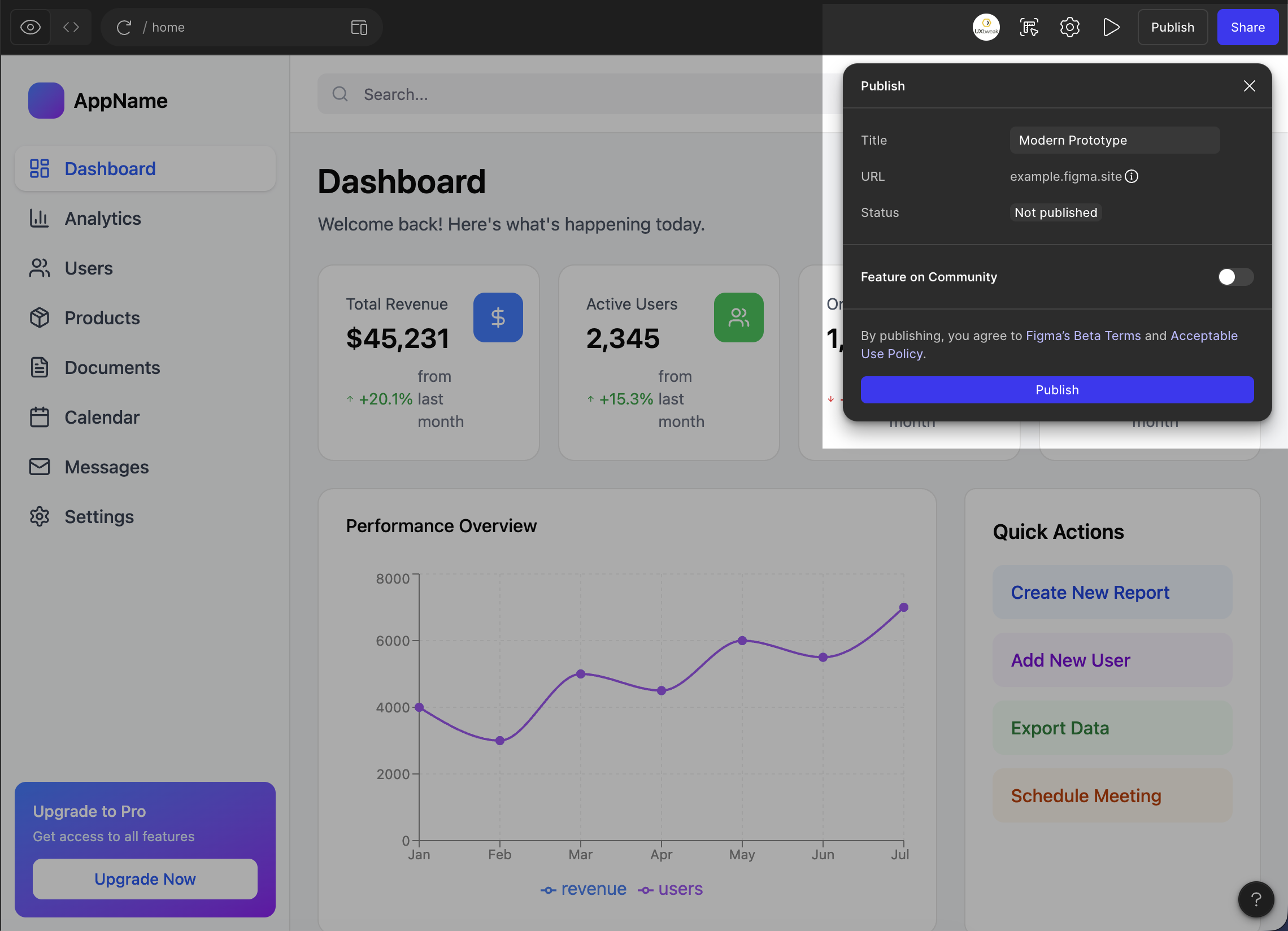
Click Publish in the top-right corner to host your prototype and generate a live URL for testing.
Choose this method if you want to avoid requiring participants to install a browser extension.
<head> of your project. For more information about launching UXtweak Website Testing study, please refer to the related article.If you need specific UX metrics like Success Rates, Paths, or Lostness Metric, you should use the dedicated Prototype Testing tool.
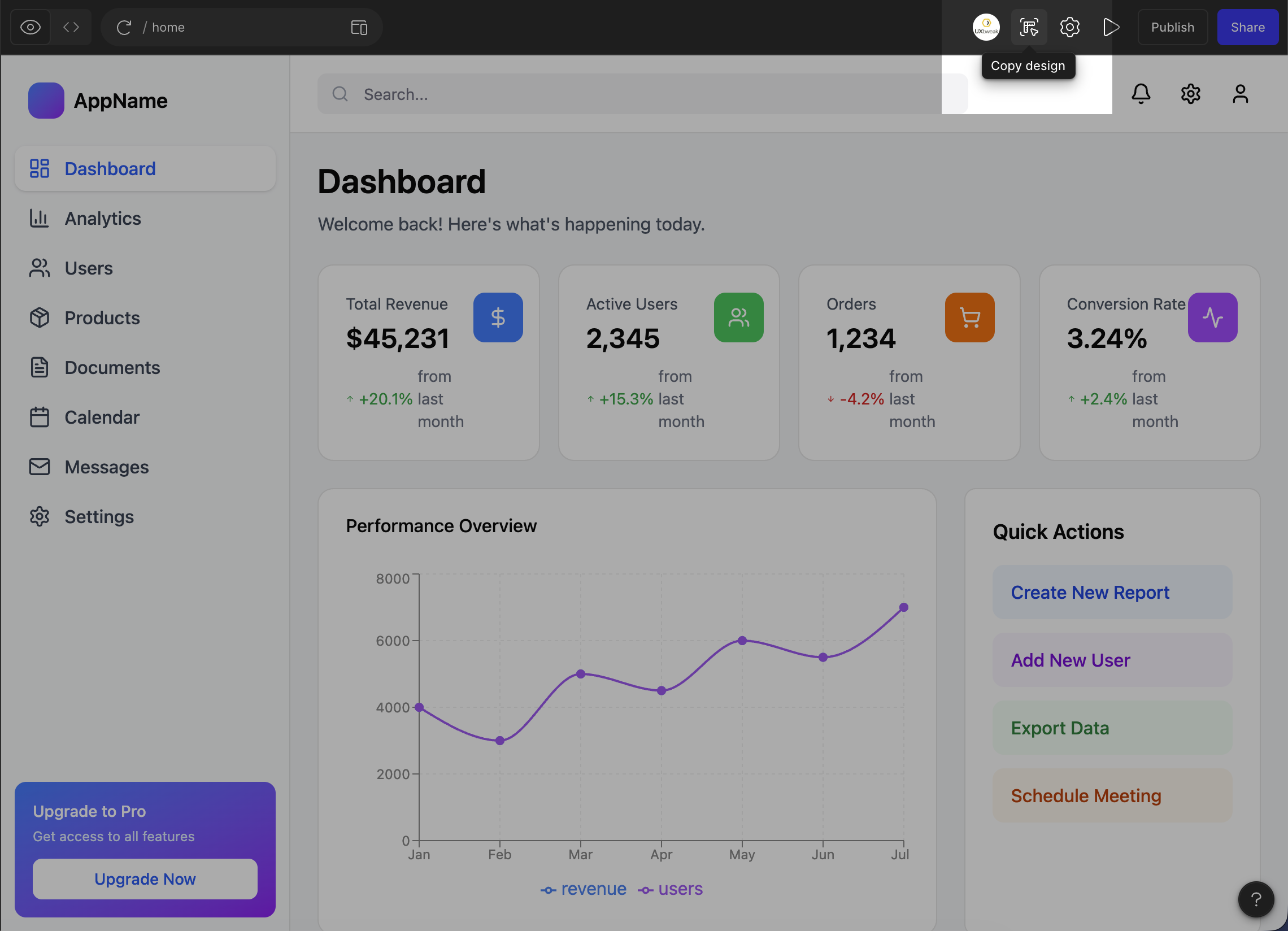
You can export your designs by clicking the ‘Copy design’ button in the top right of the Figma Make interface. Once copied, simply paste the screens into a standard Figma design file to begin setting up your prototype interactions.